Anime had never been more saved:
Studio TRIGGER's search for its own Ogikubo
As of me publishing this, it has been exactly 10(!) years since the release of Space Patrol Luluco, on April 1st 2016, and 2 years since I published my “review”.
The reason I used and still use the quotes is that I don’t consider myself a reviewer, nor a critic or any other qualifier that would make you think I have any authority or objectivity when talking about anime. What I wrote 2 years ago are the ramblings of a fan, and the only authority and objectivity in my writing came from the anime itself and any other additional material I could find at the time.
Key words here are “at the time”.
Because in these 2 years I didn’t stop searching for my Ogikubo, and while I have yet to find the true meaning of JUSTICE!, I did find even more about Space Patrol Luluco.
Intro
Space Patrol Luluco is many things: a short format, 13 episodes long anime; a celebration of Studio Trigger’s 5th anniversary; a spiritual successor to Daicon III and IV and Otaku no Video; and finally, Studio Trigger’s manifesto. You may think it’s just my opinion, but on top of Luluco being Trigger-chan, there’s even more explicit evidence outside the anime.
In fact, my search for Ogikubo now extends in two new directions... well, new for me and most people, but they’re both almost a decade old.
We have the long-forgotten audio dramas to provide the narrative epilogue by expanding on various events before, during, and after the main story. In a likely unintentional, yet perfectly fitting parallel, the official artbook provides the production epilogue, documenting the real-life ideas, struggles, and camaraderie from before, during, and after the anime's creation. One completes the story of the anime; the other explains the story of its creators.
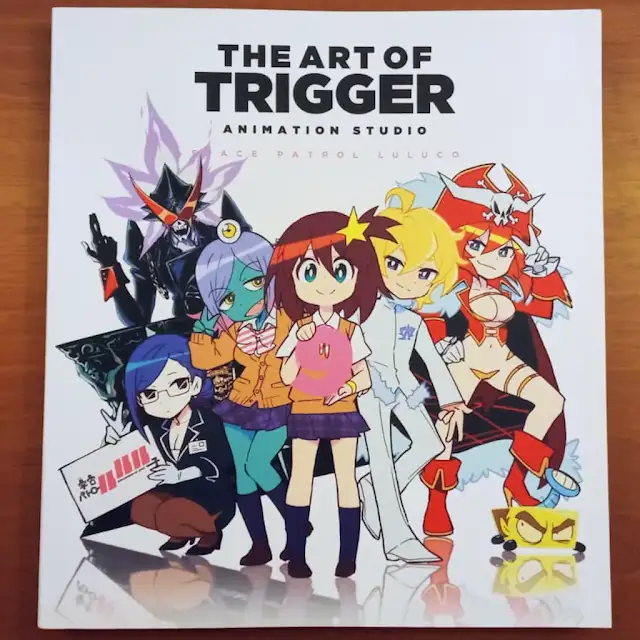
And what a story that is. We already knew from various interviews and QNAs that the idea for Luluco didn't just strike for the studio anniversary. But the artbook gives us the exact date. February 23, 2010. That's from a proposal document created after Panty & Stocking and before Trigger even existed. The core idea of a junior high school girl forced to take her father’s place in a strange organization; her central goal to “return her father’s time to its original state”; it was there from the start. This proposal got rejected, and Imaishi admits many elements ended up in Kill la Kill instead. But the heart of this "comedic short anime with a sci-fi theme and a family-oriented story" just kept waiting.
It finally found its home 6 years later in a frantic 13x7-minute short, produced by a core staff of about ten people while the bulk of the studio’s resources were poured into the simultaneously-airing Kiznaiver. As many others have pointed out, this constraint proved to be one of its greatest strengths. Luluco, in its compressed runtime, is nothing but pure, undiluted Trigger.
This essay is both a companion piece and a sequel to my original ramblings, a deep dive using these twin epilogues as two pieces of information weaved together into a double helix, drilling a path towards the truest meaning and message of Space Patrol Luluco.
We'll see how the keyword of “loss,” noted by Imaishi in 2014, explains Luluco’s obsession with being normal. We’ll see Creative Director Hiromi Wakabayashi explicitly state that he proposed the idea of Luluco becoming Trigger-chan, despite Imaishi’s initial resistance. We'll go through the roundtable discussions where the staff basically admits the whole thing was a chaotic, collaborative effort: a “normal” that Trigger decided for itself.
Then, we’ll integrate the long-forgotten official audio dramas, left almost entirely untranslated until last year, which provide canonical closure, and finally zoom out a bit to see where this tiny little anime fits in the bigger picture of what Trigger has been doing since.
This is no longer just an attempt to understand and explain why I love this short anime so much. It’s about understanding Studio Trigger’s search for its own Ogikubo: from a rejected 2010 proposal to a 2016 defining statement, and finally, into a permanent love letter.
General Thoughts - Production Hell Ogikubo
In my original review, I described Luluco as a "short celebration" made on a lower budget while the studio focused on Kiznaiver and the upcoming Little Witch Academia TV series. The artbook confirms that and more, adding lots of details and anecdotes on both the anime and the production team. The "About 10 in-house staff" note becomes a vivid story in the design team roundtable.
"At first, since the staff was small," Director Imaishi recalls, "we thought we'd make it on an even smaller scale, to save effort and keep it simple." The initial keyword was 'labor-saving'.
But as the team began working, something shifted. "We became more and more attached to Luluco," Imaishi admits. "We thought, 'If we can't make it move a lot, then at least let's draw the main characters to be as cute and appealing as possible!' From that point on, we decided to get serious. The keyword 'labor-saving' disappeared, and it turned into a 'normal' anime."
A project born from constraint discovers its heart and chooses to go all-in. The "limited yet frenetic" animation is just one of the many signs of a team pouring disproportionate love into a small passion project.
The recording sessions reflected this same energy, being so funny that the staff often struggled to hold back their laughter. Mayumi Shintani, Midori's seiyuu, was so relaxed that she ad-libbed almost all of her lines; the staff admitted that if a line was funny or good, they'd just keep it. Midori's iconic "I'll kill you" line was born this way. During the recording of the Episode 8 kiss, Nova's seiyuu Junya Enoki ad-libbed a "Goshi Goshi" sound, wiping his mouth immediately after the kiss, which shocked Luluco's seiyuu M・A・O so much she responded with "How cruel...", which was also included in the episode.
That same chaotic, collaborative spirit carried over into everything else, starting with the very setting of the show. We learn that Creative Director Wakabayashi, aiming for a story about "a middle schooler's first love", insisted on a minimal scale for the setting to contrast and complement the cosmic scope of the plot. He changed Imaishi's initial "Suginami Ward" setting to the specific "Space Immigration Special Zone of OGIKUBO", making it the sole point of alien contact on Earth. Not only did this create the perfect setup for Luluco's "normal" life to explode, but it also added another layer of references and metanarrative choices, with Ogikubo being the location of studio Trigger’s office. Real-life Ogikubo, in fact, is part of the Suginami Ward, which is essentially the heart of the anime industry, housing roughly 70 studios including giants like A-1 Pictures, khara, and BONES.
By making OGIKUBO a special zone for aliens, they are using the real-life district's status as an “abnormal” hub for creatives. When Lalaco first and the Blackholian second shoplift the city, they aren’t just stealing a town; they are stealing Trigger’s creative home and the industry's legacy.
This attention to detail also went into the characters.
Wakabayashi "strongly insisted" that a modern girl in love would wear navy blue socks and loafers, not the sneakers and white socks in Mago's early drafts. He observed that Midori's blazer-less uniform felt authentic, and so Luluco's outfit was coordinated the same way. Even the side cast emerged from this collaborative push-and-pull.
One fun example of this is Assistant Director Amemiya, who earned the nickname “Dirty Joke Police” for constantly trying to rein in Imaishi’s “ero-guro impulses”. He created Chief Over Justice because the initial proposal had "too many women". Then, Imaishi's original plan for Lalaco Godspeed was for her to be completely naked under her cloak, but Amemiya stepped in and decided to give her a swimsuit. Another example of this is Nova, who was initially supposed to be a Space Pirate under Lalaco: whenever Amemiya took a break from meetings, the remaining staff would jokingly mass-produce designs where asteroid belts covered Nova' crotch just to mess with him.
Through all this hectic and hot-blooded “boyish” side of the production, the female staff found moments of genuine connection too. Character Designer Mago was initially very shy around the veteran Trigger staff, feeling like she couldn't voice her opinions. But Artwork Designer Nonaka Ai won her over by remembering Mago's favorite candy and bringing it to a meeting, which Mago later called one of the "top 10 happiest moments" of her life.
What emerges from the artbook is the image of a small, passionate studio transforming an old idea and giving it new life, while enjoying every step of the process. Every detail, from Ogikubo's geography to Luluco's socks, was a choice made in service of a specific feeling: the exhilarating, terrifying, and cosmic scale of a perfectly ordinary first love. And every ad-lib, every inside joke, every shared bag of candy was a valuable part of building it.
Season 1: “Normal”, “Love” and “Loss”
In my review I stated that Luluco’s obsession with normalcy is self-inflicted, a shield against a chaotic world she’s actually quite comfortable in. Once again, in the artbook we find more about this, including the original idea for it, revealing it was a constant from the very first proposal.
In the 2010 concept, the proposal’s central plot, as Imaishi summarizes, involved the protagonist gaining powers and joining the space organization her father works in, trying to “return her father’s time to its original state”. In the same rough notes, we also find some bits about the transformation, stating that it may have a cost, either in terms of side effects or going into overload.
Later on, the 2014 concept describes the details of the precursor to the Judgement Gun Morphing, a transformation with dangerous side-effects: the team was proposing a system where the space patrol member would wear powered suits with the ability to transform into guns and combine together, and firing bullets would physically reduce or damage the character's body; essentially, if a shot missed its target, a piece of the shooter's body would actually disappear.
Now, let’s go back and rewatch Luluco's first reaction to her frozen dad with these new insights. Her frantically dragging him to the Space Patrol is a fun gag, sure, but it’s also the panicked reaction to her normal shattering right in front of her: a child confronted with her father’s time being stopped, and the desperate, clumsy urge to rewind it. Her subsequent enrollment in the Space Patrol is her flawed, reluctant answer to a problem she can't fix, the start of a hero's journey she never asked for, all in service of an impossible task: bringing her normalcy back.
Her first Judgement Gun Morphing only furthers this idea: while the physical price of her transformation has been replaced with comedic embarrassment in the anime, the theme remains. The Gun Morphing starts as inherently involuntary and embarrassing; she doesn't choose to be a weapon, she is forced to transform by a world that values the abnormal. On top of this, even if reframed differently, the idea of “loss” still remains: every time Luluco pulls the trigger, she is sacrificing her desire for a "normal" existence to protect the abnormal home she actually cares about.
That theme of loss, always present even if hidden under all the jokes, is exactly what Imaishi was talking about. Reflecting on a later iteration of the concept, he states plainly: “‘Loss’ is a rather important keyword when it comes to depicting Luluco”.
With this, everything clicks: her "normal is best" mindset is less like a simple preference and more like an inner shield. It’s a deeper fear than just not fitting in, Luluco is terrified of losing the normal she has left: her remaining parent, her stability, her daily life. Thus, every abnormal event, from the frozen Keiji to the suit activating during a test, becomes a potential step toward that irreversible loss of self.
But there's another layer to it, one that goes beyond her personal trauma. Normalcy also works like a useful shortcut, a way to navigate the world without having to constantly relearn how it works. This is especially true in a society as strange as Ogikubo, where humans and aliens mix and the usual rules don't always apply, having a baseline of "normal" to fall back on is almost a survival mechanism. When her suit activates mid-exam, when her classroom explodes; these are more than embarrassing moments. They're failures of that baseline. The world, her world, stops behaving the way it's supposed to, and suddenly Luluco’s life is turned upside-down, and she has to figure out how to face every new absurd space-challenge. Luluco clings to normalcy both out of fear of loss, and out of a need to function at all in a city that she thinks makes no sense.
Yet, even as she clings to this shield, the narrative begins to redefine the terms of her battle. This is perfectly illustrated in the audio drama “Season 1.5 Episode EXTRA: What's Important”.
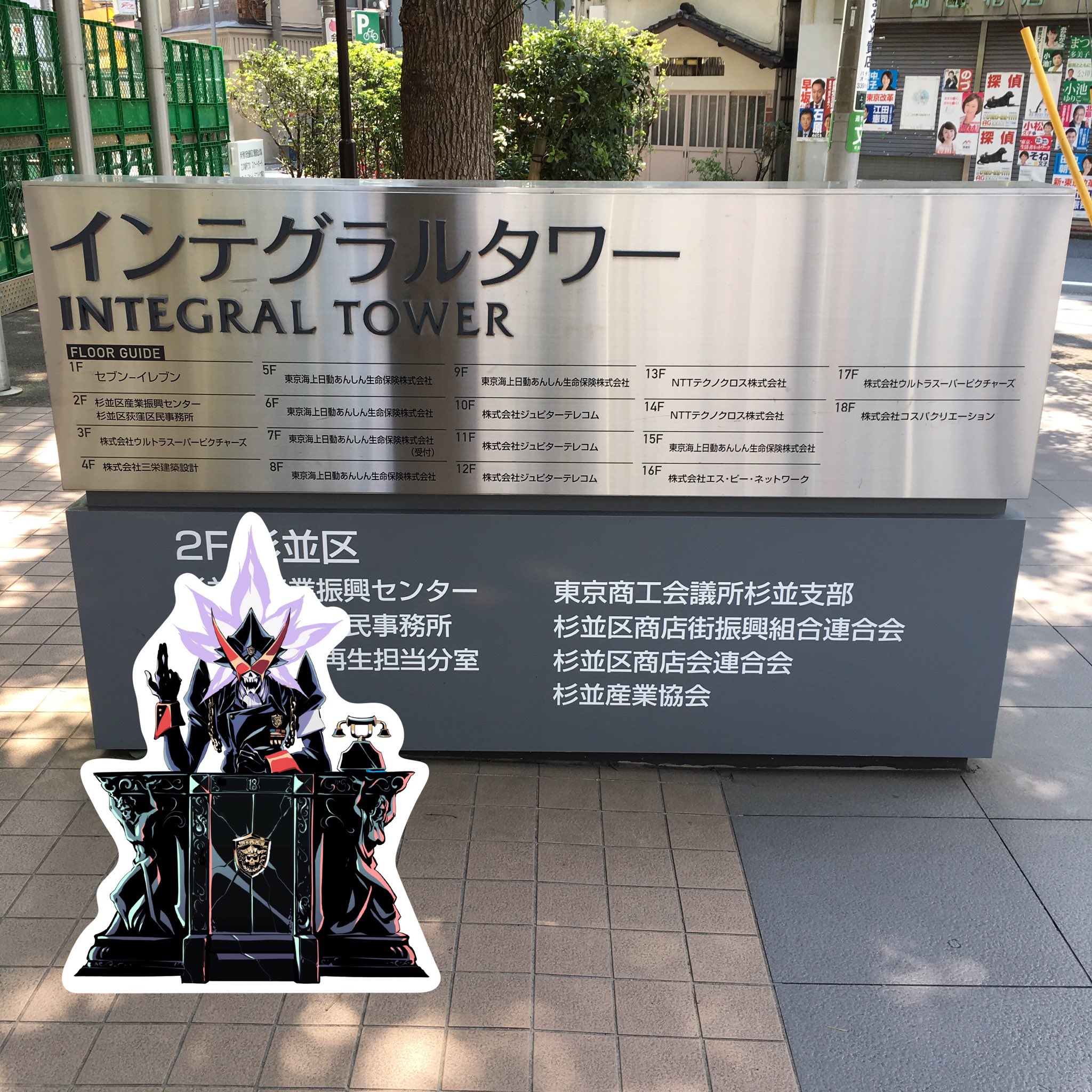
The episode finds our newly formed trio of Luluco, Nova, and Midori responding to a hostage situation at the Integro Hell Tower, the central hub of Ogikubo (and meta-referentially, the real-world building where Studio Trigger’s office is located). The culprit? An alien named the Intelligencian who has taken several distinguished university professors hostage.
After a difficult fight, the situation is surprisingly solved by the silent Secretary-kun, who speaks for the first and only time. It’s revealed that she is the only one who can hurt the villain because she has more credentials than him, having graduated from two universities. The episode ends with the Intelligencian being arrested and Luluco, Nova, and Midori discussing their grades, with Midori and Luluco fighting over who gets to teach Nova.
Luluco’s closing narration in this audio drama provides the final word on her new life. She concludes that while they are members of the space patrol, they are still students, and they must "try harder like normal students" to balance their grades with their duties.
The "normal" life Luluco desires has changed into a reality where she fights for JUSTICE! and has to compete with Midori for "mouth-to-mouth tutoring" sessions with a detached, emotionless boy who "doesn't mind either way".
This is the “normal” Luluco is already forging by the end of Season 1. Her crush on Nova becomes a fundamental part of this new normal, something that she has to juggle alongside homework and arresting space-criminals. Of course, Luluco still wants to be normal and still fears the loss of her normalcy, but its definition is already changing.
Her shield against chaos is slowly becoming the foundation for a very strange, very Trigger-like home.
Season 2: Normalcy is lost
If Season 1 builds Luluco’s shield of normalcy while redefining what she wants to protect with it, Season 2 sends the ultimate sword gun to break it: her mother, the Space Pirate Lalaco Godspeed. The artbook and audio drama reveal a lot more about Lalaco, reshaping the conflict from a simple fight into a generational, ideological battle.
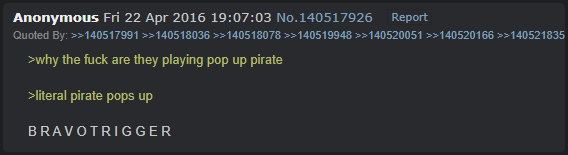
The confrontation itself plays out over three episodes, so let's look at how it escalates. Lalaco first appears as a larger-than-life threat, crashlanding on Ogikubo from space with her pirate crew and immediately wrecking havoc. But the show doesn't let her stay a simple villain for long. A flashback in S2E2 pulls back the curtain on Luluco's family history, showing us the fight that split her parents apart. We don't get the full context in the anime itself, as Lalaco's words cannot be heard, but thankfully the artbook and audio drama fill in those gaps.
Thanks to the Season 0 audiodrama, in fact, we know that Lalaco wasn’t always a lawless pirate.
In fact, she describes herself as having been an "utterly normal," "super-serious" college girl whose life was set on an "elite highway" thanks to her mother’s high-level connections. Everything changed when Keiji, then known as the "Ikaretension Detective", violently kicked down the door of her boring, normal life while looking for a criminal. Lalaco was instantly captivated by his "completely insane" and selfish way of living, which ignored any laws that got in his way. She essentially fell in love with the "abnormal" spark he brought into her world, and the two impulsively married and moved to the crazy district of Ogikubo. However, after Luluco was born, Keiji tried to do the most "abnormal" thing a Trigger character can do: he tried to become normal.
The audio drama depicts a hilarious yet heartbreaking argument where Keiji talks about getting a 35-year mortgage, buying life insurance, and enrolling Luluco in English lessons so she can succeed in the modern era. To Lalaco, this version of Keiji was a "spineless fool" who had lost his fire. She was so desperate to see the "insane" detective she loved again that she intentionally turned to space crime to provoke him. This escalated until the shootout we see in the anime’s flashbacks, where Lalaco finally left to embrace a life of lawless freedom as a pirate and Keiji swore he would go to the edge of the universe to catch her.
Amemiya’s note in the artbook adds another anecdote, absent from the audiodrama, to their separation and it is equal parts ironic and tragic: Keiji originally named her pirate alias as "Good Speed" as a blessing for her travels. Lalaco, however, misheard it as the more audacious "God Speed", liked the sound of it, and adopted it as her defiant pirate alias. This tiny detail only adds to their separation and confirms it as a failure of communication, a love story where one person’s wish becomes the other’s declaration of war.
Lalaco, grown bored of being normal, chooses pure, lawless freedom over compromise thanks to Keiji. In an ironic twist of fate, the same reason she fell in love with him becomes the reason for their separation. Both parents desire the best for Luluco and want for her to live the best life, but both of them arrive at opposite conclusions: Lalaco, having rejected her old boring life, wishes for Luluco to be as free as her and Keiji; he, however, realizes how unpredictable and dangerous this lifestyle is (to the point of wanting to buy life insurance in case anything where to happen to him), therefore he wishes for Luluco to live a stable, normal life.
All of this history hangs in the air when Lalaco finally stands face to face with Luluco.
She's not a villain of the week here to cause trouble. She's abnormalcy personified, here to remind Luluco of what she's running from: the mother who chose freedom over family, now shoplifting her daughter's entire world. And worse, she looks at Luluco's desperate attempts to be normal and sees only weakness. When Lalaco sneers at her daughter's desire for a quiet life, she's rejecting everything Keiji tried to build. Everything he sacrificed his own crazy self to protect.
Therefore, Luluco’s struggle in Season 2 isn’t just to defeat her, but to reject her mother’s cynical conclusion without collapsing back into her own self-imposed, fearful definition of normal. The season ends with Luluco’s inner shield broken, her world stolen, and herself lost adrift in space. The stage is set not for a simple recovery mission, but for Luluco’s most difficult task: to build a new definition of "normal" from the wreckage, a task that will require help from many abnormal encounters.
Season 3: The Triggerverse as Personal History
On a surface level, Season 3 is Space Patrol Luluco at its most self-referential. The journey through the Kill la Kill, Little Witch Academia, and Sex and Violence with Machspeed planets is a sudden speedrun of familiar visuals and borrowed soundtracks. It’s the point where the common criticism of it being “just a Trigger ad” seems hardest to refute. But the artbook and the show's own internal logic provide a powerful counter-argument: this isn't advertisement; it's paying respect, asserting every anime’s place in the studio's history.
I previously stated that it was confirmed that all of their original anime share the same universe. However, I was surprised to learn that this isn’t exactly true. The artbook offers new information about how these planets aren't the "actual" worlds from the original series, but rather versions that operate on "different values from the original source works". Rather than a shared universe, then, we can say that it’s more like a shared multiverse. The Triggerverse’s cosmology becomes more complicated the more you think about it, as many of these worlds can cross over (like Lucia chatting with the Ogikubo branch in Promare, a cameo of Akko appearing in the background in SSSS.Gridman, Lotte meeting Inferno Cop in the Anime Expo exclusive short) and still exist as fictional media inside each other (like the Midori plush and the Promare movie poster in Akane’s room, the Cyberpunk Edgerunners poster in SSSS.Dynazenon, the Dungeon Meshi trailer on tv in Gridman Universe). While this is fun to consider and speculate about, there is still a more relevant question: what is the true meaning of this journey through the planets of the Triggerverse?
As we learn in S4, the answer is that all of these planets are Ogikubos.
When the Blackholian later reveals he has “shoplifted” countless personal Ogikubos to the Space Patrol HQ, the metaphor clicks into place. What is an “Ogikubo”? It’s a place of personal belonging, a home that is both strange and precious. For Luluco, it’s the alien-filled abnormal district she claims to hate but doesn’t want to lose. For Trigger, their “Ogikubos” are the worlds they’ve built: the cel harmony shots of Honnouji, the whimsical halls of Luna Nova, the frenetic orange world of Sex and Violence with Machspeed, and later on the absurd png hell of Inferno Cop. These are the creative homes where Trigger figured out what they wanted to be. Season 3 is Luluco (and by extension, the viewer) touring the studio’s personal history, seeing not just the places they made, but also the places that made them.
This pilgrimage happens while Luluco’s own emotional journey continues in the foreground. Her anxieties about Nova persist, trying to engage in a “normal” conversation, worrying about other girls, and even getting her first last kiss.
And while Luluco navigates her love troubles alone on the SVM planet, the rest of the cast gets their own adventure and face-off against someone’s family history. The audio drama "Season 3 Episode 2.5: Attack of the Forest Planet" follows Midori, Nova, and the Chief as they land on a forest world to gather firewood and search for information about Ogikubo. What they find instead is a planet shaped by the same kind of generational conflict that defines Luluco's own family.
As it turns out, the Ecology Planet is the home planet of Midori's mother, Ohana Save-the-World. Once the queen of this world, Ohana fled after the "Environmental Overprotection Act" caused the trees to grow so aggressive they began killing the royal family. She crashed on Earth, specifically on Ogikubo Mountain, where she met Midori's father, a normal carpenter chopping down a tree. For Ohana, watching a man cut down the same trees she swore revenge against was the most romantic thing she had ever seen, and so she decided to stay with him.
As soon as the flashback is over, however, the Space Patrolmen are surrounded by the planet's trees, transformed by a growth serum into an enraged swarm. Chief Over Justice fights back with the usual absurdity, accidentally burning the entire planet to ashes. Midori's reaction is telling: she doesn't care, because her real home is Ogikubo.
The episode then concludes with Nova finally finding the correct search keywords to locate the shoplifted city, setting the stage for the crew's return.
In a way, Midori’s adventure in this audio drama is a parallel to Luluco’s journey thus far: both girls had their normal upended when they joined the Space Patrol; both find themselves orbiting around Nova, the mysterious transfer student; and both have to confront their family's past. All these things, however, are similar only in premise, but the execution is intentionally very different: Midori joins the Ogikubo branch out of immediate gain, as a literal get-out-of-jail card; her interest in Nova isn’t even really a crush, as it starts and ends with Midori finding Nova cool and good-looking but getting bored with him; and as her family’s past history was unknown to her, she doesn’t need a big character defining moment like Luluco, she just accepts it without caring too much and moves on, as she has always seen Ogikubo as her home anyway.
Midori, with her detachment and smugness, is more than comfortable with the chaos around her. But Luluco is not, and her story requires more of her precisely because she built her entire identity around a shield of self-imposed normalcy that needed to shatter. Midori “lacks” a character arc because she doesn’t really need one, unlike Luluco who has to fight for her growth.
Which brings us back to what Season 3 is really doing under all those references. On a surface level, it's a colorful interlude full of self-referential fanservice. Underneath that, it also continues both characters' development: in the audio drama, Midori discovers where she came from and confirms where she belongs; and in the anime, Luluco keeps taking steps toward accepting her feelings. But even beyond that, this journey is necessary for what's to come.
Before the Blackholian can declare these creations “valuable” or “worthless,” we, the audience, must see them. We must understand that KLK-X, LWA-∞, and SVM-Z are not just random references; they are Trigger’s Ogikubos. Their value isn’t in their commercial success, but in their existence as expressions of the studio’s heart.
Season 3, then, is an important retrospective for both the characters and the audience. It’s a chance for the characters to catch their breath, face their past and reflect on their present; and for the audience to look back on what matters. By the time the crew finally locates Ogikubo and returns home, thanks to this journey we know exactly what's at stake: not just Luluco’s first love, but the worth of the entire creative history that led to this point. The stage is set not for a battle over a town, but for a battle over the mantle she has to take up.
Season 4: Death, Rebirth, and Confession
Death
The tonal gut-punch of the Final Season arrives without warning. After three seasons of colorful chaos, the Blackholian’s monologue is more than a villainous plot twist; it’s a direct, cynical assault on the show’s (and by extension, Trigger’s) core values. He declares Luluco’s first love, the emotional foundation of the entire series, to be the “most worthless thing in the universe”. The artbook gives us more insights on how this climax was constructed, born from years of iteration and a specific studio chemistry.
For starters, the antagonist himself embodies the synthesis of the staff members’ philosophies. Amemiya notes he is “the root of all evil” and that originally, every incident’s culprit was to be a Black Hole Alien. Wakabayashi adds, “Ametsucchi was always going on about stories of ‘justice and evil.’” Thus, the final villain cannot be a simple space-villain of the week, especially for a story as autobiographical as Space Patrol Luluco. He's the personification of cynical nihilism, the kind of evil that doesn't just take things, it insists they were never worth anything in the first place. His design, Wakabayashi laughs, is “Imaishi-san’s tastes in full throttle”. The Blackholian is Amemiya’s pure “justice vs. evil” framework animated by Imaishi’s rule-of-cool unrestrained visuals.
After "shoplifting" everything precious in the universe, including the countless personal "Ogikubos", symbols of belonging and origin; he claims he reached the end of his collection. To complete his hoard, he didn't seek out more treasure; he sought the most "worthless, trashy garbage" in existence. His argument? That thing is a "reckless, ignorant middle schooler's foolish first love". He views Luluco’s intense feelings for Nova as a disposable, superficial byproduct of a shallow mind.
The most sadistic part of his monologue is his deconstruction of Luluco's crush. He reveals that Alpha Omega Nova is a Nothingling, a being canonically "empty, shallow, and has nothing but a good face", as described in the artbook. He admits he placed Nova in the Ogikubo branch for the express purpose of fostering this "worthless" love to manifest the Tokimeki Jewel. He didn't even want the jewel for its beauty; he wanted it specifically for the "pleasure" of shattering it, proving that her most precious memory was a fabrication based on "shallow, surface-level characteristics".
Luluco has to face this challenge on two different levels. First, she has to defeat and arrest him for his many space crimes. Second, and most important, she has to refute his arguments and prove him wrong. However, she can’t, not yet at least. The shock from Nova’s betrayal is too great for her, and when the Blackholian shatters the love gem, she dies.
Rebirth
This crisis finds its perfect resolution in the iconic hell scene with Inferno Cop.
Amemiya’s direction gives it a unique tone in the context of SPL. There is a surprisingly down-to-earth, normal chemistry between Inferno Cop and Luluco. Their conversation works incredibly well because it lets Amemiya’s sincerity shine through the unofficial studio mascot in order to reach Imaishi’s chaotic mascot-in-progress protagonist. The anime has always been genuine about its messages, but they were often presented through comedy, gags and references. This time is different though, as the “Dirty Joke Police” ensures the conversation is void of irony, leaving only the pure, burning core of the theme. When Inferno Cop says, “Normally, justice never dies” and advises Luluco that “‘normal’ is something we decide for ourselves”, it sounds like a cool line. And it is, obviously, but it’s also many other things, some of which I’ll go over later. For now, there are two important parts, starting with who is saying it: Inferno Cop senpai, the protagonist of Trigger's first and most absurd anime, fully taking the role of a mentor to save Trigger’s new heroine. This conversation keeps the sincerity we’ve seen throughout the anime and subverts the presentation with a slow and calm scene, which is why it resonates with such unexpected gravity.
The second part is how Inferno Cop's advice cuts to the heart of Luluco's struggle. He tells her to neither obsess about standards and expectations, nor to embrace chaos by completely disregarding any rule. Instead, she must accept that both she and the world around her are more abnormal than she initially thought. Rather than following someone else's idea of what should be normal and what shouldn’t, she has to decide it for herself.
Then comes the crucial question. When Inferno Cop asks her about Nova's lies, Luluco realizes something she hadn't considered: Nova never actually lied to her. She assumed he was on her side, but she never asked him how he truly feels. The boy she loved wasn't who she thought he was.
And yet, that doesn’t make her first crush any less valuable. The love was real even if the person she projected it onto wasn't. Her feelings have value not because they are towards Nova, but because they come from her.
The realization makes her feelings burst again. The color comes back. The hole in her heart fills.
On a surface level, you might say that the ultimate message of this dialogue, and by extension of the anime, is “just be yourself”. However, that’s extremely reductive, and honestly I’d argue even inaccurate. If I were to summarize it in one sentence, based not only on this episode, but on the entire anime plus its additional material, my line of choice would be... “just kill yourself”.
And come back to life when you’re ready, of course.
Because we’ve seen this happen multiple times with different characters.
Luluco is the most obvious, forced to face her normal being broken right to her face. Her love, her life, her shield of normalcy, everything she had was shattered at once. And yet, despite her thinking she had truly lost everything, thanks to Inferno Cop she realizes the value of her own feelings. With her newfound determination, she is finally ready to embrace the new normal she slowly built through her journey.
Her subsequent encounter with Lalaco is very important, despite how brief it is. Lalaco is surprised to see Luluco back to life, but is even happier to see how much she’s grown. She then explicitly states that "only after one dies and comes back to life they become a normal person". After all, we now know from the audiodrama that this is exactly what happened to Lalaco herself, before she fully embraced her freedom and started her pirate journey.
The final example of death and rebirth, although less literal, is with Keiji: after being frozen first and broken later, he’s finally put back together and he’s ready to fight. Not only that, but he’s re-embracing his craziness to fight once again as Ikaretension Keiji, this time for the sake of his daughter.
Confession
Thanks to everyone's help, Luluco locates Nova. She interrupts his monologue to put him under arrest and finally confess her feelings. But the Blackholian interrupts her in turn, trying to steal her Aflutter Gem and break it again.
This time, Luluco just creates another one. And another one. Every gem is bigger and stronger than the previous, while the Blackholian gets increasingly more furious. The power and sincerity of her love makes Nova gain a heart, and with the Big Bang of his newly born feelings mirroring Luluco's, he accepts her confession.
As a fun bit of production history, the artbook describes the early design for Nova's final form as "Super Nova”, and it had spiky hair like Gohan’s SS2 transformation. The final designs, however, leaves the reference aside and tones down the standing hair, while adding pink accents to match Luluco. The visual intent remains clear: thanks to the power of her feelings, Nova has changed.
Luluco is thus able to refute the Blackholian’s argument.
Yes, first love is shallow. Yes, it's based on surface-level impressions. Yes, Nova was empty. But none of that matters. Her feelings are hers. She just needs to keep creating gems until one of them sticks. As Inferno Cop said, conveying her feelings is the most important part, everything that comes after is a bonus.
And that bonus is the factual, final proof that the Blackholian was wrong: Nova gains emotions. From a Nothingling to a normal Nova, Luluco proves that her sincere adolescent crush, no matter how "immature" or "shallow", is a force of nature that can create a Big Bang of feelings in an empty, emotionless vessel.
Final Season: Luluco is Trigger, and other normal facts of life
In my original review, I wrote that Trigger isn't exactly known for subtlety, and the finale proves it, because of course, the most Trigger anime of all time has to end with a bang.
Nova offers himself as a bullet. Luluco pulls the trigger. The gun fires, space distorts, and the boy who was never supposed to feel anything takes the villain with him and disappears into another dimension with a promise: they will meet again.
Once the battle is over, for Luluco there is a moment of quiet emptiness. The Ogikubos are going back to where they’re supposed to be, the space patrolmen are freed from the Blackholian’s control, and everyone is celebrating. Except for Luluco. She is still standing, but she is just there, staring in the void after having just lost Nova. She has won her battle and proved the worth and power of her feelings, only for her biggest fear to come true.
But, even so, her story is to be continued, as she has also gained so much from this crazy journey. Keiji is the first to notice how his daughter is feeling, so he approaches Luluco and tells her to keep chasing Nova, to arrest him again. After all, normally she's supposed to introduce her boyfriend to her father.“‘Loss’ is a rather important keyword when it comes to depicting Luluco.”
There’s a ton of layers to the whole exchange, which is impressive for how short it is.
- First, he is reassuring her that Nova is still alive somewhere, implicitly making her remember that Nova never lied to her, thus when he promised they would meet again, he surely meant it.
- Second, by mentioning both her duty as a space patrol officer and the expectation of the boyfriend’s introduction to the family, he is helping her rebuild her own normal.
- Third, her chase to find and arrest Nova is a reflection to Keiji’s own chase to arrest and bring back Lalaco, making his words into a passing of the torch.
- Fourth and final point, by going back to the meta-interpretation, said passing of the torch is not just from Keiji to Luluco, but from Gainax to Trigger.
And her new role as Trigger-chan, the official mascot, symbol and personification of the studio.
Wakabayashi states it plainly: one reason they hired designer Mago was her prior work on Trigger-chan illustrations. He was the one who proposed that Luluco grow into that very character as a 5th-anniversary concept. Imaishi admits he felt resistance at first, but reconsidered and thought "it would be better to do everything we possibly could."
Once again, the artbook allows me to double down on one of the points I made in my first review: it's not just Imaishi. It's Wakabayashi pushing the idea, Imaishi coming around to it, Amemiya providing the pivotal scene, Mago designing the character; the whole team pouring their love into the small project that became a foundational myth, Studio Trigger’s collective manifesto.
But the audio drama gives us one final piece that even my original review couldn't include, because it was left untranslated for years. It takes us into the space between dimensions where Nova and the Blackholian ended up, and it does something unexpected. It gives the villain an arc.
The Blackholian’s actions were obviously wrong (and against space laws, but that’s a secondary problem), and his villainous monologue was rejected and proven wrong by Luluco. However, what about his feelings? Greed, cynicism, anger, selfishness; if genuine feelings and emotions have inherent worth, if “normal” is something we define for ourselves, can the Blackholian’s feelings even be wrong?
The Blackholian, trapped between dimensions thanks to Nova’s sacrifice, is forced to sit in the dark with him and talk. But right as he ponders what does a 'normal Nova' even mean, they see a shining light coming towards them.
The Whiteholian appears and presents herself to Nova, while the Blackholian is forced to reluctantly admit that they already know each other, as they were classmates in middle school. The more the cheerful Whiteholian tries to share stories from their past, the more a comically embarrassed Blackholian tries to stop her. The best part of this scene, however, is undoubtedly Nova, who has a lot of fun in teasing the now red-in-the-face, tsundere Blackholian.
This hilarious exchange suddenly takes a more serious turn, as Nova is able to take out the Blackholian’s Tokimeki Jewel. After some more teasing, the Whiteholian does the same, and reveals her own jewel.
On Nova’s suggestion, the two combine their Tokimeki Jewels. The power of their combined love opens an interdimensional exit, so that Nova can leave and search for Luluco. Before that, however, it is time for him and the Blackholian to say goodbye.
And slowly, painfully, the Blackholian admits the truth. He wasn't always a cosmic villain. He was once a middle schooler who couldn't express his feelings to the person he loved. In his own words, that failure cursed him. Consumed by jealousy and regret, he spent the rest of his life shoplifting throughout the universe to try and fill the void. The "most worthless thing in the universe" was the one thing he wanted most. When Nova finally prepares to leave, the Blackholian hesitates. "Just... a little longer," he says, then stops himself.
Having realized his mistakes, the Blackholian is finally able to genuinely apologize. Nova's response is as genuine as it is surprising: "Now I'm glad I was your puppet. ...Thank you for everything". Now that he has emotions, Nova could easily (and justifiably) be angry and/or resentful towards the Blackholian, but he’s able to understand and forgive him instead. The boy who never lies is now grateful, as the journey caused by the Blackholian led to him discovering his emotions, his first love, and becoming just a “normal” Nova. On top of that, with this audiodrama we can also look back at Nova’s closing line in S3E1.
Obviously, Nova was talking about the Killlakillian they defeated on the thread planet. However, from the way he acts and the scene is framed, I’d say it’s heavily implied he wasn’t just talking about that."the hunger in his heart could only be satisfied by love"
At first, I thought he might’ve been referring to himself, as while he couldn’t feel love he might’ve still wanted to experience it. But with Episode ∞, we can also see him talking about the Blackholian. Nova, at least to some degree, always understood him; but without emotions, he was never able to provide the emotional support he needed. At least, not until the end of the anime, when he is finally able to defy him and save Luluco. Then, in the very end of the audio drama, once Nova is starting to understand his newfound feelings and the Blackholian is coming to terms with his mistakes and is now able to genuinely apologize, they are finally able to reconcile.
Thanks to this episode, we not only have another death and rebirth sequence, but just like with Luluco, this one ends with a confession too. The Blackholian's cynicism wasn't a philosophy. It was a wound. And the thing that heals it isn't power or treasure or control. It's the same "shallow first love" he spent decades devaluing, lying to himself to admit he wanted it.
So, what does it mean for Luluco to become Trigger-chan? It means the studio is doing what Luluco did, what Nova did, what even the Blackholian finally does. They're looking at their own past and history; and they're saying it all has value. Not because it's perfect, but because it's theirs. Because they made it, and they loved making it.
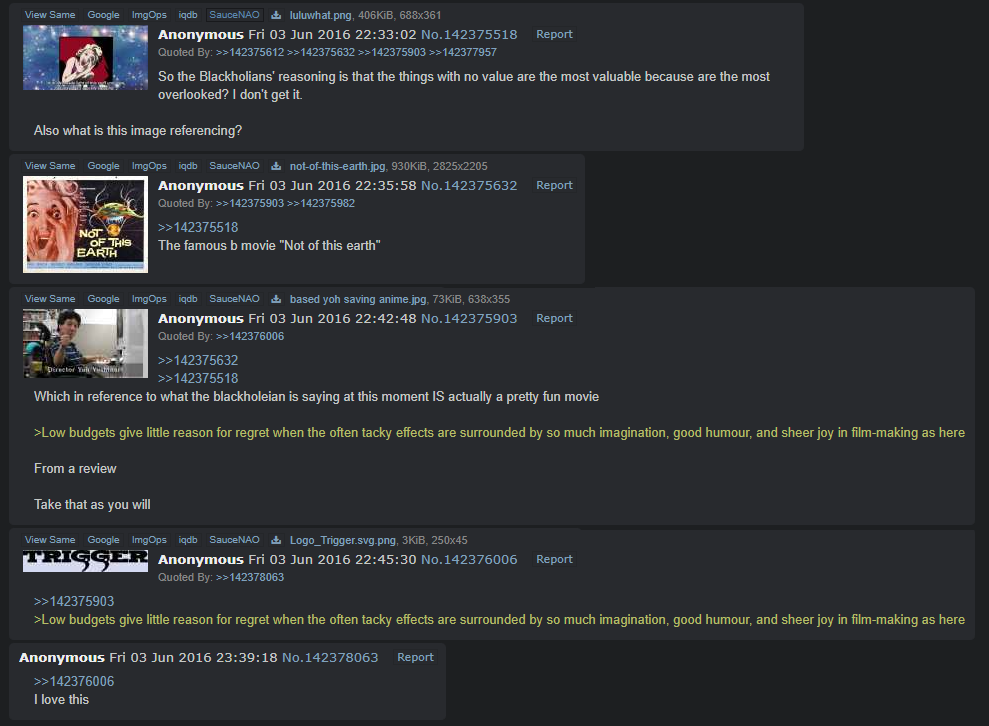
I don’t even need to mention the countless examples of this, as the whole Space Patrol Luluco anime is a love letter to Trigger and their past work; just as the artbook is a love letter to Space Patrol Luluco itself. However, there is an interesting easter egg that I want to highlight, even if I’m not even sure if it’s intentional: in S4E1 we are shown some of the things stolen by the Blackholian. They include the Mu continent, for which a shocked Nanae Hirabayashi had to somehow find a render when casually asked "Do you have a 3D model of the Mu continent?"; and an image which /a/nons recognized as based on the poster for the movie Not of this Earth. I’ll let the screencap speak for itself:
The girl who once declared "normal is best" now rides a gun-shaped motorcycle across dimensions, chasing the boy who learned to feel because of her. The Blackholian, alone in the dark for most of his life, finally admits he was wrong and begins to imagine a future with the Whiteholian by his side. The studio that started with a handful of ex-Gainax employees now celebrates its fifth anniversary by turning its mascot into a protagonist and its protagonist into a mascot.
First love is invincible. Requited love reigns supreme. And somewhere across dimensions, a normal girl with a trigger for an ahoge and a normal boy who never lies are having the space-journey of their life. To be continued, indeed.
"To Be Continued?": The Canonical, Wonderful Epilogue(s)
In my original review, the “To be continued?” section was a hopeful catalog of loose threads and potential futures: the summaries of the audio drama, the Cemetery Hills doujin, the staff’s expressed but unfulfilled desire for a second season. Now, the audiodrama and especially the artbook add way more to the list.
First, they provide additional canonical closure to aspects left open by the anime ending.
As we’ve seen, the final audio drama episode gives us the reason behind the Blackholian's hatred of Luluco's heart, revealing him as cursed by his own unconfessed middle school love. This reframes Season 4's conflict not as a battle against some abstract evil, but against the very real grown-up cynicism that tries to devalue genuine, youthful passion.
That same episode also confirms Nova is actively searching across dimensions for Luluco, transforming the finale’s hopeful parting into an active, ongoing reunion quest. The Blackholian called Luluco’s crush worthless, but not only did it save the universe, it also gave the Nothingling feelings and a purpose.
This pairs perfectly with Imaishi’s newly-created illustration for the artbook, which shows Luluco and Nova, 4 years later, sharing a peaceful, happy reunion. The director’s visual epilogue tells us where they are now, fulfilling the promise of the trigger pull and the space-drive into the sunset.
Second, there are some concrete ideas discussed in the artbook, coming straight from the design team roundtable interview.
Creative Director Hiromi Wakabayashi proposed a story where Nova is the one who experiences "First Love" this time around. In this version, because Nova gave his power to Luluco at the end of the series, he has lost his memory. Luluco would then have to struggle to become Nova's first love all over again, and in a classic Trigger twist, she would go around smashing his "Heart-Throbbing Jewels" whenever he seemed to fall for another girl.
Does this premise sound familiar? Well, that’s a similar premise to what happened to Nova in the Cemetery Hills: Geekboy Homecoming doujin!
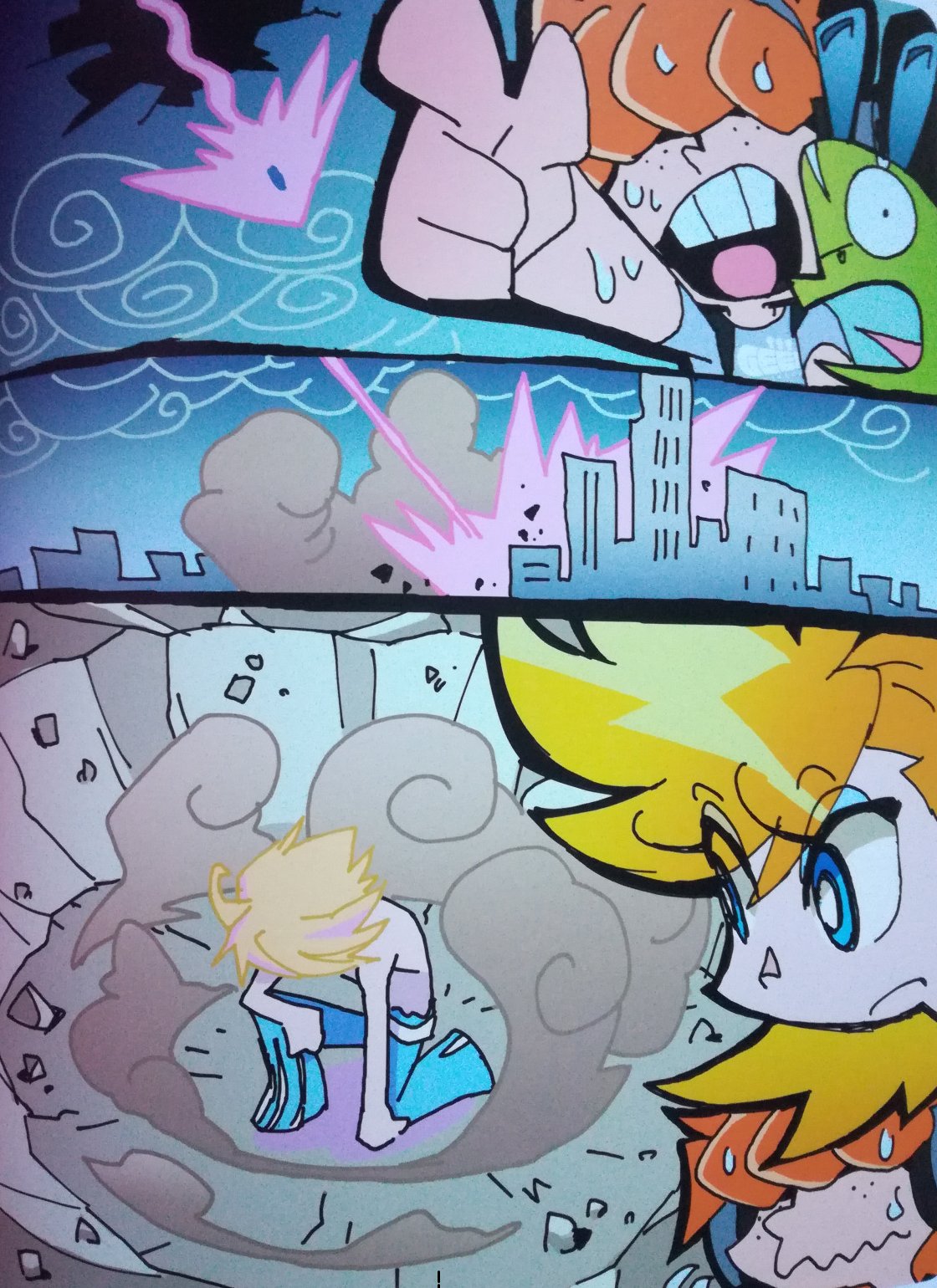
Wakabayashi also pitched a "high-dimensional" idea for a potential 10th-anniversary sequel. In this version, Luluco would utilize the power of Trigger's entire catalog of past works to transform through different generations. Wakabayashi imagines Luluco using the magic of Little Witch Academia or the damage-sharing mechanics of Kiznaiver as part of her arsenal while navigating the galaxy, but this idea opens endless possibilities.
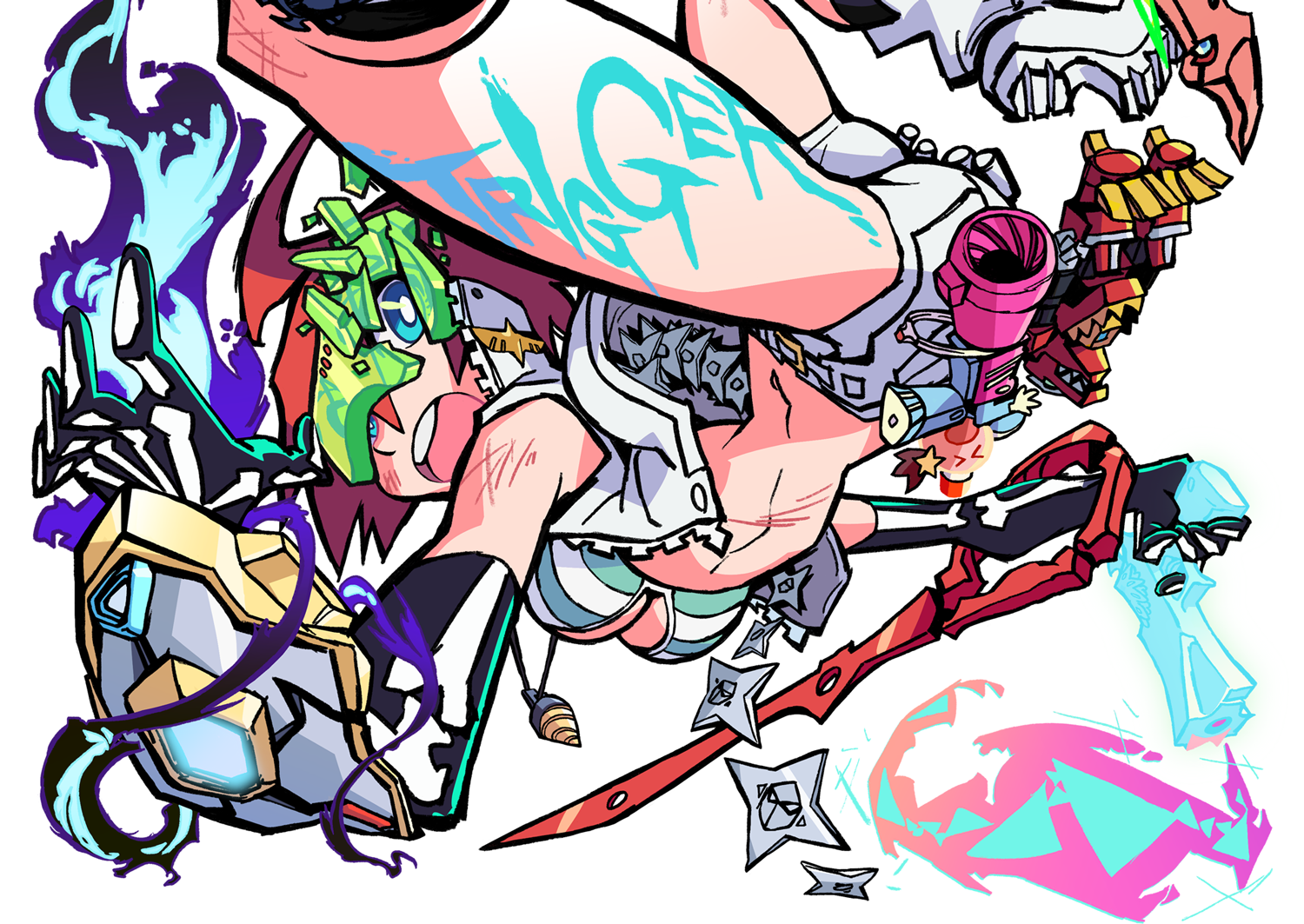
Again, does this premise sound familiar? No? Well then, it’s my pleasure to introduce you to Perfect Trigger-chan, a powered-up version of Luluco/Trigger-chan that has weapons and powers from (almost) all of Trigger’s past works, including not only Panty’s gun and Simon’s core drill from the recently acquired Panty and Stocking and Gurren Lagann, but also a Judgement-Gun-Morphed Luluco from her own anime!
The artbook's roundtable discussion transforms sequel talk from wishful thinking into proof of enduring love. The staff’s brainstorming is evidence of a world and characters so alive in their creators’ minds that the possibilities remain infinite. The numerous questions and pleas from the staff about a second season are a testament to the vibrant, collaborative energy that the artbook itself captures and preserves.
In a way, The Art of TRIGGER: Space Patrol Luluco is itself the sequel. Not in narrative, but in spirit and purpose. If the anime was the manifesto, with its explosive, public declaration of identity, then the artbook is the loving afterworld, a careful archival of how that manifesto was written. It contains the decade-old proposal, the rejected designs, the candid photos of snacks in the conference room, the Q&A where the voice actors admit to ad-libbing and peeking under Nendoroid skirts.
Every page is a validation of the finale’s thesis. The “worthless” first love, the “abnormal” creative process, the personal “Ogikubos”; they are all valuable enough to document, curate, and print. The artbook is Trigger refusing to let its own history be “space-shoplifted” by time or cynicism. It is an act of self-declared value. In collecting their labor of love between hard covers, they truly cemented Luluco not as a transient short, but as a permanent, treasured piece of their legacy.
The story may be complete for now, but its place in Trigger's history is undeniable.
And honestly, I’m more than happy with this normal, wonderful ending.
“See you next Trigger animation”: The next Ogikubos
For this section, please allow me to go a bit further off-topic and talk about some of the anime that came out after Space Patrol Luluco. If Luluco was Trigger’s manifesto for its 5th anniversary, what came after it? In the decade since, as the studio navigated larger projects and external collaborations, did they manage to “stay wonderful” and true to the identity they so joyfully affirmed?
Kiznaiver
Kiznaiver is an interesting outlier in Studio Trigger’s history, as it definitely feels different from everything they have done before and after it. Director Hiroshi Kobayashi explicitly stated that he wanted a work that didn't feel "Trigger-like". He intentionally shifted the story from being battle-heavy to focusing on the "inner hearts" of the characters. To achieve this, the studio brought in Mari Okada to write all twelve episodes. Her signature focus on high-school coming of age drama and complex emotional ties meant the show leaned into character introspection rather than the high-octane absurdity seen in Kill la Kill or Luluco.
Despite its not-Trigger-like status and the consequent divided reception, it remains an interesting part of the studio's history, as they themselves acknowledge by framing it as one of the many Ogikubos visited in S3. In fact, during its final episode Luluco and Nova actually appear in the background, a cameo the staff confirmed takes place during their search for Ogikubo.
Little Witch Academia (TV)
If Kiznaiver was a departure, Little Witch Academia was a homecoming to core principles, making its thematic parallels to Luluco all the more poignant. Director Yoh Yoshinari has repeatedly framed it as an allegory for the animation industry itself. He initially conceived Akko as a parallel to young animators, full of passion but lacking technique, egotistically confident in her key frames but unable to draw clean in-betweens, transposing this figure into the role of a witch’s apprentice. The TV series’ conflict between magic and technology extends this into a reflection on the analog-to-digital transition.
Most tellingly, Yoshinari cited the story of Hayao Miyazaki being inspired by Panda and the Magic Serpent, despite its flaws, as a central theme: “What’s important is the feelings you got from watching it, and the fact that you had admiration for it”. The baton-passing scene at the very end of SPL couldn’t have been more fitting. Both series are, at heart, about protecting that initial, wonderful first love that makes you want to create—or transform—in the first place.
Darling in the FranXX
Darling in the FranXX is one of the most interesting works, but not for the reason many would think: despite its massive popularity, it doesn’t really count as a Trigger show.
And I don’t mean it in a subjectively dismissive, “I don’t like it, so it doesn’t count” way, but Trigger themselves considers it more of an external collaboration than one of their own projects. If you look at their official website, it’s absent from the list of their works; an absence even more notable when the Inou-Battle and Dungeon Meshi adaptations or smaller projects like Sex and Violence with Machspeed and Power Plant n.33 are featured there. The only other missing works are Turning Girls, probably because rather than a studio project, it’s considered a project by the four women who almost entirely worked on it; and The Lenticulars, Amemiya’s most recent web series aired on the official Trigger youtube channel, which again might be considered more of a personal project.
Personally, I’d like to consider both of these as Trigger works, but for DarliFra it seems the situation is more complicated. Both in one of their twitch livestreams and in the reddit AMA, Wakabayashi is often asked about it and says that while he’s proud of the work done in collaboration with A-1 Pictures, it isn't considered a "100% genuine Trigger show" in the same way their independent projects are. Trigger’s main contribution was handling the heavy lifting of pre-production and design work with Nishigori. While A-1 Pictures executed the bulk of the actual production, Trigger was the mastermind behind the mecha designs and provided the action storyboards for the entire series. When asked about the ending, Wakabayashi says that did the production for the ending sequence of DARLING in the FRANXX, so he’s super satisfied with that! If the question is about how the story was wrapped up, however, Wakabayashi says that the ending is the director’s choice, and he doesn’t think that it’s right of Studio Trigger to comment on how the story wrapped up.
Promare
Next, we have some interesting what-ifs and hopeful cameos.
When promoting Promare, Wakabayashi said that Luluco fans should pay particular attention to Lucia. In one scene we can see her browsing what looks like 4chan in one tab, but most importantly, talking with the Space Patrol Ogikubo branch in a group chat. This, plus the fact that in the Battle of Geekboat One artbook/doujin Lucia’s original design apparently has larger twintails, similar to Nui Harime from KLK (I use apparently because I haven’t been able to find the actual image yet), makes me think that the original plan for Lucia was to become Spring some time after Promare, but for some reason it hasn’t happened (yet?).
SSSS.Gridman & GRIDMAN UNIVERSE
Then, we go back again to one of SPL’s themes: the defense of creativity that Luluco so joyfully declared finds its most eloquent and ambitious expression in a franchise helmed by a key architect of that defense: Akira Amemiya's Gridman series. If Luluco was Trigger's manifesto, Gridman expands its thesis into a universal dialogue on the symbiotic relationship between creators, fiction, and fans.
First, as interviews detail, the franchise's revival was an act of fan passion, with Amemiya starting from the short Gridman - boys invent great hero to resurrect a dormant tokusatsu series he loved.
Then, SSSS.Gridman is about the positive impact that escapism and fictional media can have on real people and the real world. At the start, what Akane is doing is basically create an Ogikubo with her powers, where she traps herself to escape her real life and forcefully tries to shape this setting into her ideal world. This is later reversed in the ending, when the main characters gain awareness and are able to wake up from their dreams, surpassing Akane’s plans and forcing her to face herself. In the final episode, Gridman is finally able to save Akane from her depression and she is now ready to leave her fictional world and wake up to face reality.
The meta-commentary finally peaks in GRIDMAN UNIVERSE. The film’s central message is that believing in "fabrications", from rumors and myths to anime, is a uniquely human power that helps us evolve, both as individuals and as a collective. The resolution, where the hero is powered by everyone's shared belief, is a triumphant generalization of SPL’s message: the worlds and loves we cherish have immense value because of the meaning we give them, not just personally, but collectively too.
New Panty and Stocking
New Panty and Stocking is probably the Trigger anime with the heaviest weight on its shoulders, having to carry both the fan’s expectation for a sequel after 15 years of waiting after the original ending on a cliffhanger right after a sudden plot-twist (on Christmas of all days), and the staff’s wishes and ideas to continue the story that had to be put on the backburner because of the rights belonging to Gainax. After such a long time, the announcement of a sequel at Anime Expo 2022's "TRIGGER 10 YEAR ANNIVERSARY & ANNOUNCEMENT" panel only served to revive these expectations and raise them exponentially higher.
Which is why I have to say I have mixed feelings on this.
On its own, it’s an overall fun experience with some fantastic standout segments. As a sequel, however, it’s an obvious downgrade compared to the original. As a 10th anniversary project, it’s arguably worse.
The first red flag for me was the reveal of the new character designs: while I don’t mind the gradients for the Anarchy sisters, Garterbelt’s design was obviously censored. Not only are the big lips gone, but even his priest outfit doesn’t have the crosses anymore. And while censorship is already bad, it’s even worse when you consider that this is P&S we’re talking about: if they’re censoring the character designs, whether willingly or because forced, what will they censor next?
Then the show aired, and after a few episodes the answer was: basically everything besides Panty.
While Stocking keeps her love for sweets, she is never shown doing anything sexual, while the previous season dedicated an entire segment to her having an ugly bastard fetish; the Demon Sisters were in romantic, incestous love with each other; Garterbelt was a masochist gay pedofile who rebelled against God and was then cursed with immortality, while now he’s simply a (gay?) masochist. Even the musical segment of this season, on the surface an ode to swear words celebrating the absolute freedom of saying/doing whatever the fuck you want, ends up sounding hollow when you consider that besides Panty’s vagina cube in the very first episode, swear words and the occasional nipple are the only things left from the insanity of the original.
This is especially weird when you consider that Trigger is the same studio that, before New PSG, insisted that "the loli must stay" in Edgerunners, and that even when admitting that the times, and the audience, have changed, they as creatives have the duty to push against the stigma, as without fanservice, everyone will die.
Final Thoughts: My Normal is What I Decide
Almost 63K characters. A google doc 24 pages long. A bit more than 2 months, and that’s only counting the actual writing before this conclusion. Once I finally managed to buy the artbook, I knew I wanted to translate* it, just like I did with the audiodrama before that. Some of the things in there, I already knew, from the many, many staff interviews I looked up. But others were either completely new, unexpected confirmation of my speculations, or even eureka moments that explain more recent connections I hadn’t realized were there.
This whole process reminded me why I do this: because Space Patrol Luluco made me care enough to dig. To translate untranslated audio dramas. To track down an artbook from another country. To spend 63,000 characters explaining why a seven-minute short about a middle school girl and her first love matters.
And despite all of this, I still think there could be more to say. Just like in my previous review, I tried to write this one balancing the objective evidence from official sources and staff declarations with my own point of view as a fan.
My first review was mostly about what the anime said. This is about what Trigger wanted to say.
If there will ever be a part 3, it will be about what I can get from all of that and point it at the world. Because, as a certain flaming skeleton guy said, my normal is something I define for myself. Hopefully without dying in the process, but if that were to happen, I’d try preparing myself so that I can be ready to come back to life.
In all my writing, I actively tried to never use the word "deep." It's a concept I see being put on a pedestal more and more, but I don't like using it as the sole metric for judging fictional media. There's a saying about how beauty is in the eye of the beholder. While that has its pros and cons, I'd much rather use a more thematically appropriate variation and say that depth is in the drill of the digger.
I think something is deep because it made me care enough to spend time with it, to genuinely think about it and try grasping its messages.
That’s what I’ve been trying to do with my reviews/ramblings on Space Patrol Luluco, and hopefully I managed to leave you with something.
Luluco's search for normalcy was about building something that could hold, piece by piece, out of the chaos she was given. It ended with her becoming the studio’s icon, declaring that “normal” is not an external standard to follow, but a personal moral compass to define. The journey between those points was anything but normal, both in the anime and behind the scenes. It was a six-year process, a collaborative tug-of-war between chaos and justice. We see the “loss” in Luluco’s fear, the “value” in the studio’s history, the intentionality behind the metamorphosis into Trigger-chan. The “normal” that Trigger arrived at and advocated in SPL is this very process: heartfelt, referential, constrained yet boundless, deeply personal yet joyfully shared. Look at your past, start digging and reach for what you genuinely want.
To someone, a middle-school girl’s first love may be the most worthless thing in the universe. For her, and many others, it’s the spark that connects dimensions, the bullet that pierces the black hole, and the worthy reason to keep space-driving into the next absurd, wonderful, and perfectly normal adventure.
First love is invincible. Requited love reigns supreme. And somewhere out there, someone is creating their own original story; while someone else is writing their own essay about something they genuinely love, or something they genuinely hate; and I really wish the best for all of them. I hope they dig deep and find whatever they're looking for, creating a new, normal, wonderful gem in the process.
As for me? I'm done (for now).
Unless Trigger announces something today, for Space Patrol Luluco’s 10th anniversary. One man can hope.
To be continued, eventually.